
What is the Ideal Canadian Consent Standard?
The Office of the Privacy Commissioner recently published guidance on Obtaining Meaningful Consent that sets a much lower bard than Quebec’s Law 25’s Obtaining Valid Consent (French), starting a debate in our office as to which one our clients should comply with. We thought business leaders deserve a definitive answer to a simple question: What standard of consent should we strive for? Let’s begin with looking at the definitions and core principles of these two consent standards:
Meaningful Consent (OPC – PIPEDA)
The Office of the Privacy Commissioner of Canada defines Meaningful Consent as consent that is informed, voluntary, and understandable.
Individuals must reasonably understand what personal information is collected, how it will be used, and the associated risks.
The OPC emphasizes a user-centric, contextual approach, recognizing that consent must be meaningful at the time it is obtained. Just documenting consent is not enough.
Core principles of Meaningful Consent include transparency, reasonable expectations, and accountability.
Valid Consent (CAI – Quebec Law 25)
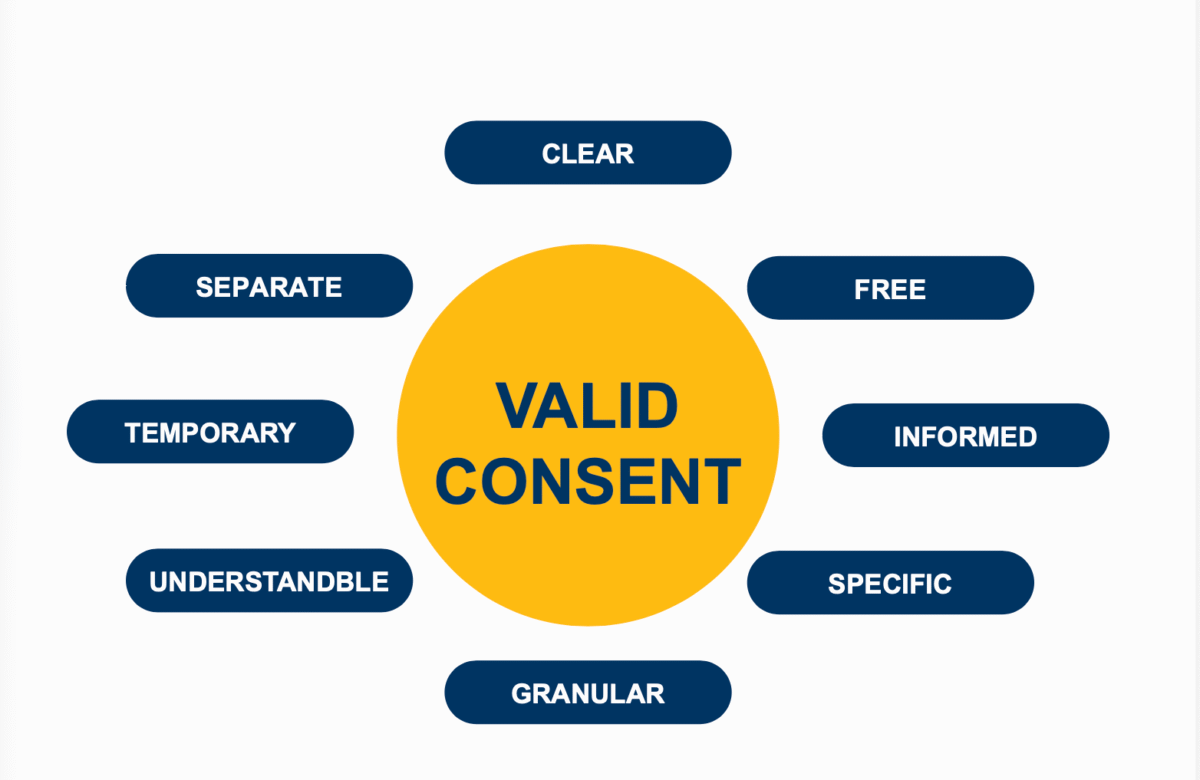
Under Law 25, the Commission d’accès à l’information (CAI) defines Valid Consent as consent that is free, informed, specific, and given for clear purposes, and requested separately from other information. Consent must be expressed in clear and simple language, and explicit consent is required for sensitive personal information.
Core principles of Valid Consent include autonomy, specificity, proportionality, and enhanced protection of individuals’ rights.
With that context, let’s review the key difference between the two forms of consent.
Key Differences
- Formality and Explicitness:
OPC allows implied consent in low-risk contexts;
CAI strongly favours explicit consent, particularly for sensitive data.
- Presentation Requirements:
Law 25 requires consent requests to be clearly distinguished from other terms (e.g., not buried in contracts).
OPC guidance is less prescriptive.
- Purpose Limitation:
CAI requires consent to be tied to specific, identified purposes.
OPC focuses on reasonable expectations, which may allow broader interpretation.
- Risk Threshold:
OPC evaluates consent through a risk-based lens;
CAI applies a rights-based lens, prioritizing individual control regardless of organizational burden.
Next we will look at the implications for organizations operating in Canada.
Implications for Organizations
Organizations operating nationally must meet Quebec’s higher bar to ensure consistency. This affects:
- Consent design (separate consent mechanisms)
- Language clarity (plain-language UX)
- Data governance (purpose tracking and documentation)
- Product development timelines (privacy-by-design becomes mandatory)
Quebec compliance often becomes the de facto national standard, as 23% of the Canadian population resides in Quebec. Therefore 20-25% of your National database must be compliant to Law 25 standards.
Real-World Applications
- Marketing Platform:
Under OPC guidance, implied consent may suffice for basic analytics. Under Law 25, explicit consent is required if data profiling could significantly affect individuals. - HR or Customer Portals:
CAI expects granular consent for each purpose; bundled consent risks invalidation during an investigation by the CAI.
Challenges for the business communities include consent fatigue, UX complexity, and reconciling global platforms with Quebec-specific requirements.
Legal Frameworks and Enforcement
- OPC: Enforces PIPEDA through investigations, recommendations, and reputational consequences. The OPC have not been granted enforcement powers to date, which means they must use the courts for enforcement.
- CAI: Law 25 introduces administrative monetary penalties, significant fines, and expanded enforcement powers. Fines can be up to 5% of the organization’s global turnover.
Meaningful Consent prioritizes understanding and context;
Valid Consent under Law 25 prioritizes clarity, specificity, and individual control.
In practice, Law 25 sets the stricter operational standard. Download our white paper on the CAI’s Consent Guidance (English)